



The process of Aircraft Re-Registration may be required to enable aircraft owners to operate the aircraft lawfully. Aircraft Re-Registration is a requirement that arises due to changes in conditions or if a prior registration was rendered invalid. Although often confused, re-registration and renewal are not the same and apply in different situations. This essential distinction minimizes grounding, compliance and administrative delays.
Aviation registration records are extremely important for safety, liability and regulatory compliance. Re-registration is done when a change occurs in ownership particulars, eligibility status, or registration validity. If you do not take any re-registration action, registration can become invalid, thus limiting use.
The process of re-registering an aircraft. It explains what it is, when the need arises, and how it differs from normal renewal. To assist owners in managing the process smoothly, practical guidance is included within. You will know when Aircraft Re-Registration applies and how to handle it with confidence by the end.
Understanding Aircraft Re-Registration
Aircraft re-registration refers to the registering of aircraft again in case the previous registration has become invalid or cancelled. This is unlike normal renewal. Re-registration usually takes place after a major change related to decision eligibility or registration status.
Often causes include failure to renew registration, cancellation by the administrative authority, and changes requiring new registration record. An aircraft’s legal status in the registry after re-registration.
This process guarantees that only eligible aircrafts stay on active status. It also eliminates obsolete or incorrect information from the public record. Safety and regulatory efficiency are supported by accurate registration.
| Aspect | Aircraft Re-Registration |
| Purpose | Restore valid registration |
| Trigger | Invalid or cancelled record |
| Relation to renewal | Separate process |
| Operational requirement | Mandatory for legal flight |
When and Why Aircraft Re-Registration Is Required
When a standard renewal is not possible, aircraft re-registration becomes mandatory. Registration cancels or lapses normally leads to this event.
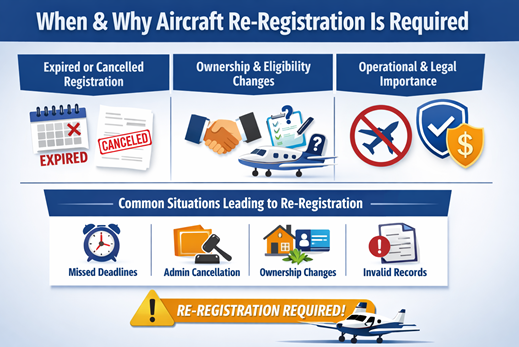
Expired or Cancelled Registration
Registration is subject to cancellation if not renewed in time. The mere act of renewal will not restore its validity once it gets cancelled. You have to register again.
There are also administrative cancellations. These may result from record inaccuracy or eligibility problem. Re-registration fixes these issues.
Ownership and Eligibility Changes
The existing registration can be invalidated due to certain ownership changes. For instance, new modifications in ownership structure or eligibility status involve re-registration. This guarantees compliance with registration regulations.
Re-registration verifies the compliance of the present owner. It creates a new, exact record.
Operational and Legal Importance
Flying a plane without proper registration is illegal. Legal authority to fly is restored. This prevents enforcement actions against owners.
Valid registration may affect insurance coverage as well. Re-registration ensures safety at operational and financial levels.
Common Situations Leading to Re-Registration
- Missed renewal deadlines
- Administrative cancellation
- Ownership or eligibility changes
- Invalid or outdated records
These scenarios show why re-registration exists. It resolves issues that renewal cannot fix.
Aircraft Re-Registration Compared to Registration Renewal
Aircraft owners often confuse re-registration with renewal. While related, they serve different purposes. Understanding the difference avoids mistakes.
Compliance Risk Comparison
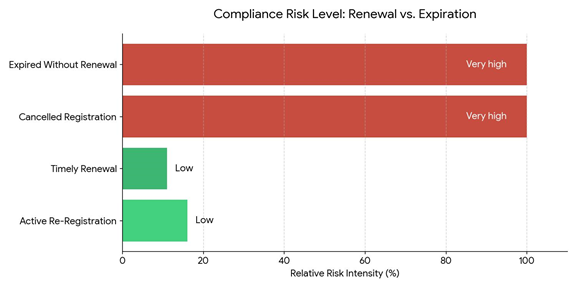
- The entity is exposed to unacceptably high risk of incurring severe penalties and being blacked out due to both Expired without Renewal and Cancelled Registration carrying a Very High risk which is 100%.
- Keeping your renewal status up to date is the best way to minimize risk (11%) furthering your legal permissibility while reducing hassle.
- The active re-registration (which is certainly a valid route to recovery) carries with it slightly more risk and hassle than a simple renewal and as such it shows that prevention is always better.
Practical Tips for Managing Aircraft Re-Registration
Managing it starts with knowledge. Owners must frequently check registration status. Detecting issues early helps to fix them.
Maintain intricate records of ownership and aircraft. Correct records aid faster processing. Lack of information often delays.
Recondition is important to not wait. Deferments comprise postponement of debugging thus increasing the time period of grounding and interrupting the operation. Well-structured preparations limit stress.
Best Practices for Aircraft Owners
- Track registration status consistently
- Address renewal notices promptly
- Maintain accurate ownership records
- Respond quickly to cancellation notices
Following these practices minimizes the need for re-registration. Proactive compliance is always easier than corrective action.
Staying Compliant Through Aircraft Re-Registration
Aircraft Re-Registration is important in situations where you cannot renew the certificate. It will restore legal registration and compliance with aviation standards. When and why knowing will help owners respond correctly.
In this guide, we will explain what Aircraft Re-Registration at National Aviation Center is, when it is required and how it differs from renewal. The owners were given practical tips to manage their registration responsibilities. Knowledge facilitates smoother operations.
By performing timely and vigilant registration checks, an aircraft owner can prevent compromising the aircraft’s legal ability to operate. Re-registering an aircraft is not merely an admin task. Aircraft registration is a vital process which is mandatory and useful tool.
Practical aircraft record options to review next
Use the secure options below when re-registration raises a follow-up question about owner details, documents, certificate status, recorded interests, or a form request.
Questions before continuing with re-registration
What should be ready before continuing with re-registration?
Have the aircraft identifier, owner details, signer information, and any document tied to the request available before starting. For this re-registration concern, complete information helps keep the next request focused and reduces avoidable back-and-forth.
When should another aircraft record action be checked for re-registration?
For re-registration, check another option when the situation also involves a sale, renewal, address update, certificate request, title search, lien, mortgage, or registry status concern. The right support depends on what changed.
What details usually cause follow-up during re-registration?
Follow-up during re-registration is more likely when names do not match, identifiers are incomplete, signer authority is unclear, or the document does not explain the requested change. Reviewing those details early keeps the request cleaner.
Can National Aviation Center help prepare re-registration information?
National Aviation Center can organize owner-provided information for re-registration, screen common preparation issues, and guide the request toward the secure form area. Official FAA review and acceptance remain outside National Aviation Center.
Additional aircraft record references for Aircraft Re Registration Guide
These nearby references keep registration, ownership, certificate, title, and document-preparation materials connected to the main topic.
More record references connected to Aircraft Re Registration Guide
These aircraft record references can help with document names, supporting materials, and nearby ownership or registration details.
Aircraft record resources connected to Aircraft Re Registration Guide
Use these nearby aircraft record materials when ownership, registration, certificate, title, lien, mortgage, or document details need a closer look.