


The first and foremost step of having any legal rights and powers to operate an aircraft is Initial Registration. Initial Registration is when an aircraft is entered into the official registry and approved for use. For new aircraft owners, this procedure marks the switch from buy to legal to fly. An aircraft must be registered to be operated, insured, or transferred.
Many first-time owners forget the importance of registration. It’s not just a mere formality. The aircraft’s official identity is generated by the aircraft registration process. Accurate registration helps in oversight, accountability, and recordkeeping. Delays at this stage can led to operational delays and administrative problems.
This guide provides an explanation of Initial Registration in detail. It details what initial registration involves, why it’s important and the difference with later registration actions. Included is practical guidance to help owners navigate the process with confidence. By the end, you’ll understand how the first registration eliminates legal uncertainty and creates responsible aircraft ownership.
Understanding Initial Registration
The process of registering an aircraft for the first time under a new owner or new registration record is Initial Registration. This step marks the official registration of the aircraft in aviation. It gives the aircraft a recognized registration status associated with the ownership information.
The process usually takes place after buying a new or unregistered aircraft. The same may apply when an aircraft enters a new registration system for the first time. When the owner is eligible, initial registration confirms it.
When the aircraft is finished, it will be legally recognized. Flight activity will be limited, for now. For this reason, registration needs to occur timely and accurately.
Why Initial Registration Is Essential
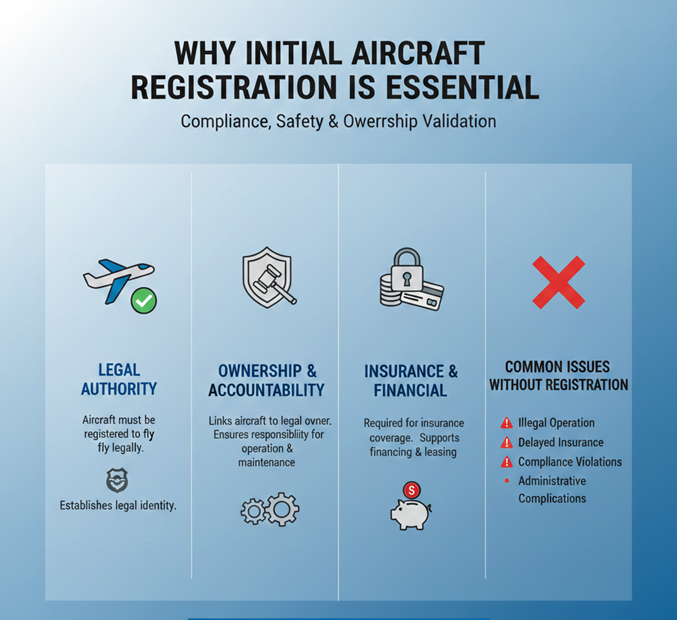
Initially registering your aircraft will help ensure your compliance for aviation safety and ownership. It impacts almost all aspects of aircraft operations.
Legal Authority to Operate
Each aircraft must have registration in order for the aircraft to fly legally. This right is given at registration. All vehicles must be registered under the Registration and Licensing of Vehicles Act, 1983 and Rules there under.
The aircraft’s status is identified by Registration. This identification is necessary for flight operations, inspections, and documentation.
Ownership and Accountability
The first registration links the aircraft to its owner. This ensures operation compliance and maintenance accountability. Possession records are essential for aviation regulation.
Having clear ownership records supports accident investigation, enforcement and administrative actions. This essential link is created by initial registration.
Insurance and Financial Protection
Most insurers will not provide coverage without registration. Insurance protection may not apply if not registered. This exposes the owners to financial risk.
Registration status may also influence financing and leasing agreements. Transactions are safer with proper registration.
Common Issues Without Initial Registration
- Inability to operate legally
- Delays in insurance coverage
- Compliance violations
- Administrative complications
These issues demonstrate why it must be completed correctly. It protects both operational and financial interests.
Initial Registration Compared to Other Registration Actions
Aircraft registration involves several different processes over time. Initial registration differs from renewal or re-registration in purpose and timing.
| Registration Action | Purpose | When Used |
| Initial Registration | Create first record | New ownership or first-time entry |
| Registration Renewal | Extend valid record | Before expiration |
| Re-Registration | Restore invalid record | After cancellation |
Registration Process Complexity
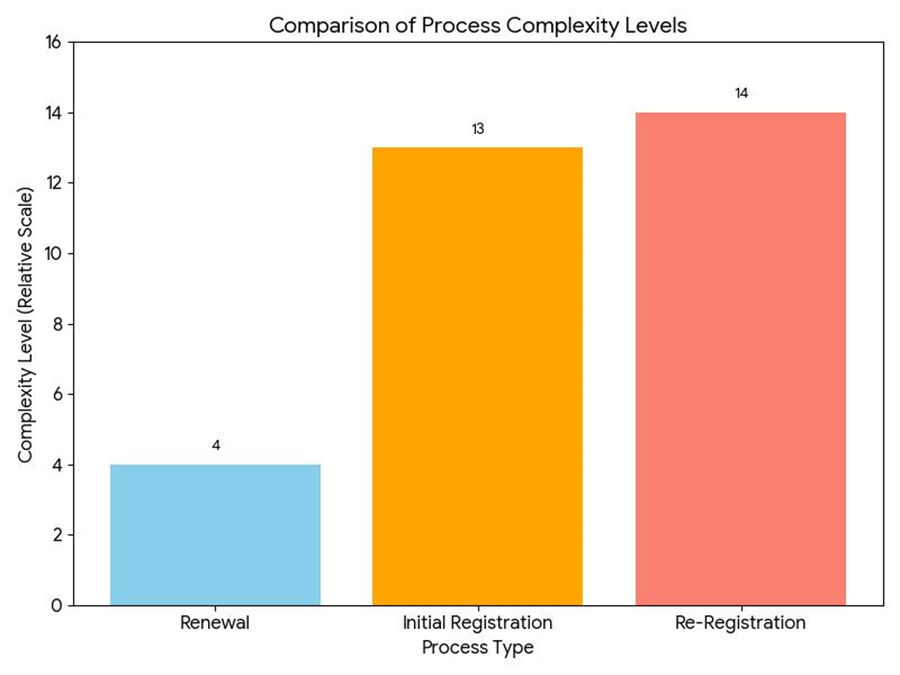
- With a score of 14, Re-Registration is the most complex process that requires the highest level of examination and efforts.
- The new registration is a complicated affair which is considered to be at complexity level 13. The initial registration is considered to be almost at re-registration except not as high in complexity. However, it is a very important phase and if not carried out properly it can cause hindrance in the future.
- The lowest complexity means that the renewal processes are the most straightforward. Since the parties already have records, and there are fewer requirements, it is a simpler filing than a new or corrective one.
Practical Tips for a Smooth Initial Registration
Early Registration Preparation Starts with Accurate Documentation. It is essential for ownership records, identity, and aircraft details to be complete and consistent. Mistakes may slow down approval.
Tact is essential. Right after acquisition initiation, registration must be done. Delays are more likely due to waiting.
Start maintaining organized records right away. Good documentation make renewals and change of ownership easy. Keeping records supports compliance over time
Best Practices for New Aircraft Owners
- Register immediately after purchase
- Verify all ownership details carefully
- Keep copies of all registration documents
- Track registration confirmation before flight
Following these practices reduces stress and delays. Preparation leads to smoother approval.
Building Compliance Through Initial Registration
The Initial Registration is the beginning of lawful ownership of an aircraft. It confirms identity as well as ownership and authority to work of an entity. Awareness of its significance helps owners avoid costly mistakes.
This guide explained what Initial Registration at National Aviation Center is, why it matters and how it is different from other registration actions. Provided practical tips to ease the process. Confidence stems from knowledge.
Timely and accurate Initial Registration safeguards an aircraft owner’s right to control, insure and manage their asset. It is more than just a bureaucratic requirement. It is the first step toward safe, compliant, and successful ownership of an aircraft.