

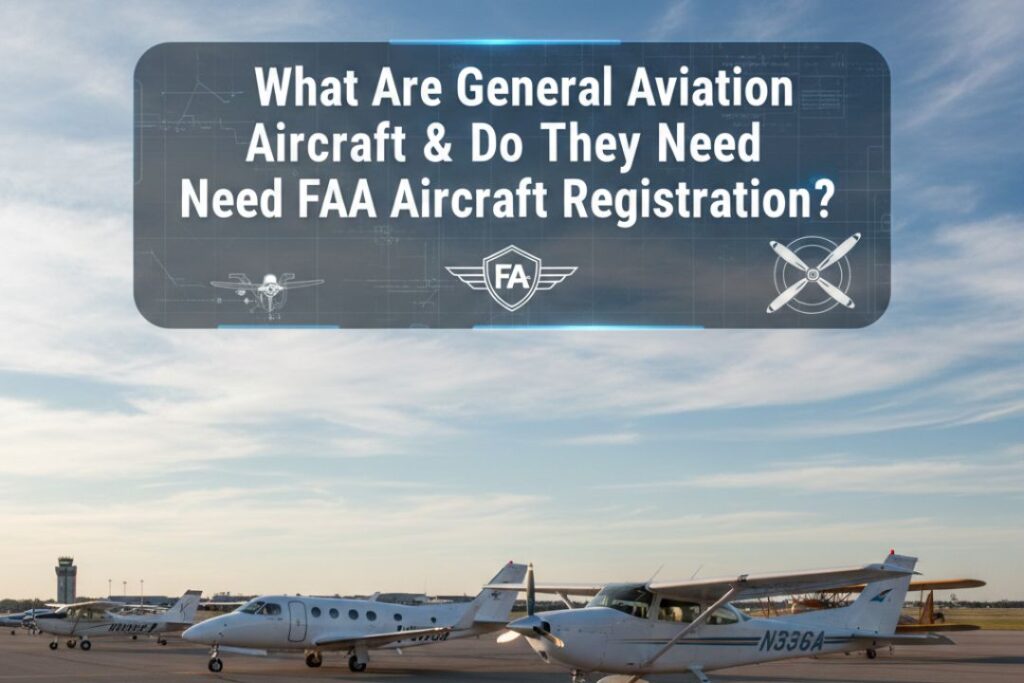
General aviation aircraft are all aircraft operated under 14 CFR Part 91 rules, and these aircraft do require FAA aircraft registration when they meet federal documentation standards.
These operations include a broad range of flying activities outside of commercial air carrier service, and our service helps owners register, maintain, and update their documentation efficiently through a streamlined online system.
General aviation encompasses private, recreational, instructional, business, and aerial work flying. Even when aircraft are technically capable of carrying significant loads or performing advanced missions, they fall under general aviation when operated within the Part 91 framework.

What General Aviation Includes
General aviation is a large and diverse sector of the aviation community. Under Part 91 operations, owners and pilots engage in activities that do not fall under airline or commercial commuter operations. This category includes aircraft used for:
- Personal travel
- Instructional flights
- Aerial surveying
- Agricultural operations
- Corporate and business aviation
- Flight training
- Emergency support flights
- Charitable or community programs
General aviation does not include aircraft operating under the commercial frameworks of Parts 121 or 135, even when those aircraft are small. When an aircraft is used for airline, scheduled commuter, or on-demand air taxi operations, it is no longer considered part of general aviation during those specific missions.
How General Aviation Differs From Commercial Carriers
Many aircraft types move between different kinds of operations depending on their mission, paperwork, and pilot qualifications. The defining factor is the regulatory environment under which the aircraft is flown. General aviation operations differ from commercial carrier rules in several ways:
- Maintenance cycles are based on Part 91 requirements
- Crew certification expectations differ
- Operational limitations are tailored to noncommercial flying
- Cabin, passenger, and cargo requirements are less restrictive than those of commercial carriers
- The aircraft is not operating under a commercial certificate during the mission
Our service helps aircraft owners interpret how this distinction affects registration obligations and ongoing documentation needs.
Do All General Aviation Aircraft Need FAA Aircraft Registration?
Federal law requires registration for nearly all general aviation aircraft based in the United States, except for a few exempt categories such as ultralights. Registration ensures that ownership, serial number, and operational records are traceable. We help owners file and manage:
- Initial FAA Aircraft Registration
- Renewals
- Replacements
- Ownership updates
- Documentation corrections
Most general aviation owners use our online portal because it reduces filing errors and keeps documents organized over time.
How We Help With First-Time FAA Aircraft Registration for General Aviation Aircraft
Owners who are registering a general aviation aircraft for the first time often contact us because they want clear guidance and simple online tools. Our support assists with:
- Preparing the information required for the registration form
- Uploading supporting documentation
- Providing a digital submission process
- Helping ensure that the aircraft is not registered elsewhere
- Keeping track of filing status
Some owners also need additional filings or corrections after their initial FAA aircraft registration, which our system supports as well.
Types of Aircraft That Fall Under General Aviation
Because general aviation covers a wide set of flying activities, many different aircraft types fall under this category. These include:
- Fixed-wing airplanes of all sizes
- Rotorcraft such as helicopters and gyroplanes
- Gliders
- Light sport aircraft
- Business jets
- Agricultural aircraft
- Amphibious airplanes
- Experimental aircraft
When operated under Part 91 rules, even transport-category aircraft can become part of general aviation if used for noncommercial missions.
When an Aircraft Is Not General Aviation
Some aircraft are capable of flying under general aviation rules but are not considered part of general aviation when used for certain missions. This is the case when an aircraft is operated under:
- FAA Part 121 airline operations
- FAA Part 135 commuter or on-demand operations
- Transporting paying passengers under commercial certificates
- Scheduled commercial flights
- Contracted air carrier operations
Aircraft shift in and out of these classifications depending on the type of operation performed. We help owners understand when their aircraft must comply with documentation requirements associated with each type of operation.
Ownership and Documentation Considerations
General aviation owners often need clear direction on how their ownership status affects FAA aircraft registration documentation. We help owners work through:
- Single-owner filings
- Co-owned aircraft filings
- Business-owned aircraft documentation
- Supporting forms for partnerships and corporations
- Updating ownership for successors or new buyers
When a plane exchange of ownership occurs, we help users file the correct documents so the transfer is reflected accurately on FAA records.

Maintaining Registration After Initial Filing
Once the aircraft is registered, owners must continue to keep records current. We help owners manage:
- Renewal requirements
- Address updates
- Replacement requests
- Ownership corrections
- Lien records
Our platform keeps these filings organized so owners do not misplace paperwork or miss a mandatory update.
When an aircraft change of address occurs, our digital system allows owners to quickly submit the required information.
General Aviation and the Airworthiness Certificate
While general aviation registration establishes legal ownership and identity, the airworthiness certificate establishes the aircraft’s eligibility to operate safely. Many owners work with us to keep their registration information accurate so their airworthiness status is never delayed due to administrative issues.
Maintaining accurate documentation helps ensure future inspections, maintenance planning, and regulatory compliance remain organized.
How a National Aviation Center Filing Helps Owners Stay Compliant
General aviation ownership comes with several ongoing documentation tasks beyond the initial filing. Our service provides an online portal that helps keep everything in order. Users rely on our system for:
- Filing new registrations
- Submitting corrections
- Uploading ownership documents
- Ensuring timely renewals
- Securing replacements when certificates are lost
- Keeping historical records organized
Documentation is critical for safe operations, insurance, maintenance planning, and legal compliance. We help remove the paperwork barrier that prevents many owners from staying current.
Additional Documentation That General Aviation Owners May Need
General aviation owners may encounter circumstances that require filings in addition to their registration. We support filings such as:
- Requests for historical ownership records
- Documentation related to financing
- Evidence of previous ownership transfers
- Lien recordings
- Verification of active registration
- Replacement certificates
Some owners also request an aircraft abstract of title to review their aircraft’s chain of ownership, lien status, or historical filings. We make it easy to order this information through our portal.
General Aviation Aircraft and Financing Records
Owners who finance their aircraft or use the aircraft as collateral for business or personal credit may need to record an aircraft mortgage. Our service provides an efficient way to submit the appropriate filings digitally so lenders and owners have the documentation they need for legally recorded interests.
Accurate and complete records help maintain financial and legal clarity for all parties involved.
When Ownership Changes for General Aviation Aircraft
Owners frequently buy or sell aircraft within the general aviation community. Documentation updates become necessary each time this occurs. We help with:
- Filing ownership transfer documents
- Uploading bills of sale
- Correcting previously submitted ownership information
- Preparing replacement registration documents
- Ensuring filings meet FAA standards
A smooth transition of ownership depends on proper paperwork, and our system helps make the process significantly easier for both buyers and sellers.
Helping New and Experienced Owners Through the Same Portal
General aviation includes a broad range of owners: long-time pilots, companies with business fleets, flight schools, and first-time buyers. Regardless of experience level, our online system helps with:
- Step-by-step guided filing
- Digital uploads
- Secure transmission of documents
- Easy access to pending and completed filings
- Tools available at any time of day
Owners often tell us that having a centralized filing resource reduces stress and simplifies their long-term aircraft management.
Supporting Every Stage of the General Aviation Ownership Journey
General aviation ownership involves evolving documentation needs over the life of the aircraft. Our service helps owners with:
- Initial FAA aircraft registration
- Renewals
- Owner information updates
- Historical documentation
- Lien filings
- Replacement certificates
- Address corrections
- Research involving prior owners
We remain a constant resource for keeping FAA records accurate so pilots, businesses, and operators can focus on flying.