



The FAA registration address rules affect aircraft ownership and compliance more than you’d think. All registered aircraft must have a current and correct address on record. This address guarantees that official notifications and warnings get to the right owner without any delay.
You can miss critical correspondence if your address is old or wrong, as an aircraft owner. The notices may pertain to registration, compliance, or enforcement matters. Not receiving them does not excuse noncompliance.
The accuracy of addresses further affects the integrity of aviation records. Registration details for items enable regulators, lenders and purchasers to verify ownership and accountability. Especially in inspections, sales or finance reviews, the address can cause confusion.
Rules Address Explained in Detail FAA Registration 10 Words The reason the regulations exist, how they differ from other aviation records, and how owners can stay on the right side of them. When owners know what is required of them, they can avoid penalties and stay worthy.
Overview of the Address Registration Rules set by the FAA
According to the rules on FAA registration address, aircraft owners shall keep their mailing address current at all times. The address on file indicates where official correspondence is sent.
The rules apply to persons, companies, and other registered entities. It is essential to update the registration record of the bureau in case of any changes.
These rules are clear in their objective. The FAA should have the ability to communicate directly with the parties. This includes notifications pertaining to registration status, regulator changes, and safety measures.
| Requirement | Description | Importance |
| Current Address | A valid physical or mailing location where the owner can receive official correspondence. | Ensures Notice Delivery: Guarantees receipt of urgent Safety Alerts and Airworthiness Directives (ADs). |
| Timely Updates | Changes to an address must be reported to the FAA Registry within 30 days. | Prevents Compliance Gaps: Avoids “Return to Sender” scenarios that can trigger registration revocation. |
| Accurate Records | Ensuring name and address details match supporting legal and identity documents exactly. | Supports Record Integrity: Prevents title issues and delays during aircraft sales or financing. |
| Ongoing Responsibility | The legal obligation rests solely on the owner to initiate and verify address changes. | Reduces Enforcement Risk: Mitigates the risk of FAA fines or legal action for non-compliance. |
It is necessary to maintain address accuracy. The obligation continues as long as the registration is valid.
Importance of Address Rules for FAA Registration
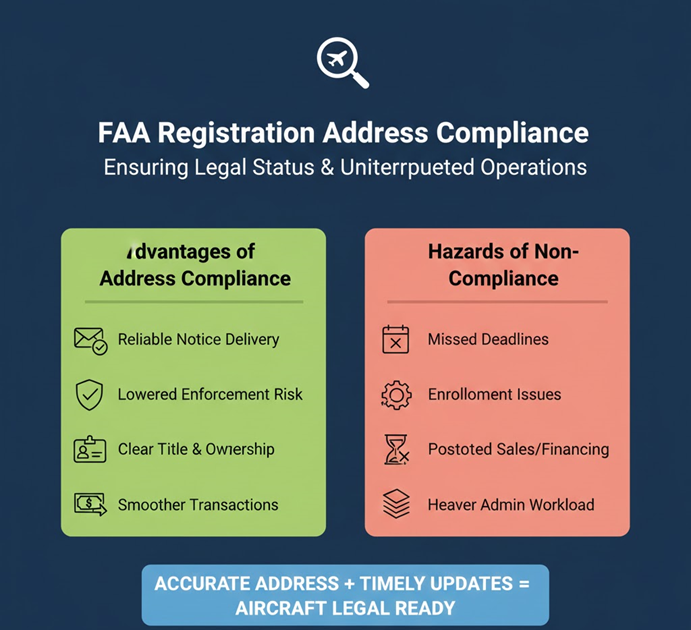
Rules on FAA registration address are important as communication failures result in compliance risks. If an owner is not served, they may miss deadlines.
If you don’t respond you may face techniques or registration issues or delayed operations. You can easily prevent these outcomes by simply maintaining the address.
Correct addresses safeguard other parties as well. Registration data helps buyers, lenders and inspectors identify who is responsible. An old address creates mistrust in the registry.
A list of some of the positive effects of compliance.
Advantages of Address Compliance
- Delivery of your official notices reliably!
- Lowered risk of enforcement.
- Identify claim clearly.
- Different way of Paying
Not Complying Address Risks
- Unable To Meet Compliance Deadlines
- Technical Difficulties to Enroll
- Postponed sales or financing.
- Heavier administrative workload.
The rules regarding address registration are stressed upon a lot by the FAA.
Comparative Analysis of FAA Registration Address Rules and Other Aviation Records
Unlike other aviation documents, such as ownership transfers or aircraft mortgage, address rules do not. Every record type has a specific function in the registry.
Comparative graph Representation of address updates in terms of severity and complication compared to other record changes.
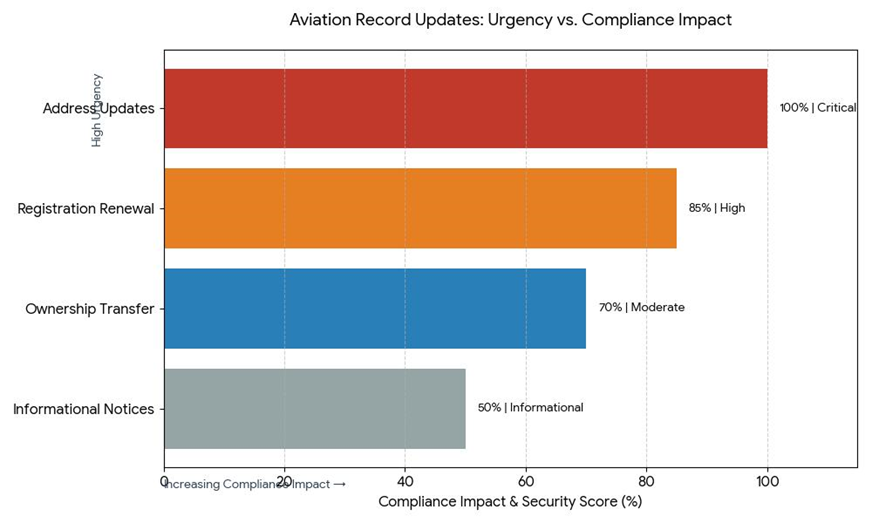
- The Critical Link: The FAA calls address updates “critical” because they are the primary way they communicate safety issues and send airworthiness directives (ad). If this connector is broken, your aircraft will be effectively off the radar of safety regulators. 100% Compliance Impact.
- Hard-Stop Compliance: All registration renewals may be predictable but they are hard-stops. A lapsed registration results in an instant legal grounding of the aircraft. This makes for a high impact task requiring tracking years in advance.
- Chain of Custody: Ownership Transfers have a high impact on compliance through the chain of custody as it resets all legal and financial liability from that of the aircraft. If a transfer is not reported promptly the previous owner can be liable for the acts of the new operator.
Change of address updates are high priority because they affect all communications and mailings going forward. Other filings may happen with less frequency but are reliant on accurate address data.
This comparison shows you should never postpone address maintenance.
Specific demands and common scenarios
There are many common situations where the FAA registration address rules apply. Transitioning to a new home can be a clear instance. When a business moves this needs to be updated.
Modifying preferences around where to receive mail can also cause action The record must reflect the actual address if the correspondence is redirected.
Single Owner
When transferring, individual owners must update the address. If you are moving for a short time, you may want to consider whether mail delivery will continue.
Business and Entity Holders
Businesses must update records when moving offices or changing mailing addresses. It is important for regulatory clarity.
We can see here that not all address updates affect ownership. Whenever communication particulars alter, they apply.
Staying Compliant with FAA Registration Address Rules
To maintain compliance with FAA registration address, one must proactivity manage records. As a regular administrative activity, owners should consider address updates.
Usually, the exchange or change is identified, update submitted and confirmed for record accuracy thereafter. Delivery must be punctual.
There are two lists that consist of best practices and mistakes to avoid.
Ideal Address Compliance Techniques and Tips
- Go over registration records often.
- Make sure to update any change in address.
- Verify the updates were successful.
- Keep records for future reference.
Typical errors made when updating your address
- Putting off updates after moving.
- Inconsistent Names for Entities
- It is wrong to assume mail forwarding is sufficient.
- Mistake in verifying accuracy of record.
Adhering to best practices minimizes risk and regulatory communications run smoothly.
Adhering to FAA Address Standards for Registration
For keeping communication clear and reliable, there are FAA registration address rules that exist. They promote safety, transparency, and administrative efficiency.
Up-to-date addresses are as essential as the action required. FAA registration address rules through avoiding silence suit, it keeps the liquid ownership clear and updated.
Aircraft owners can stay compliant without hassle by knowing the regulations, spotting the usual cases and following best practices. It is important to consider the address accuracy as a critical aspect of responsible aircraft ownership.
If everyone complies with FAA registration address rules it will save time, reduce risk and support confidence in the aviation system.