

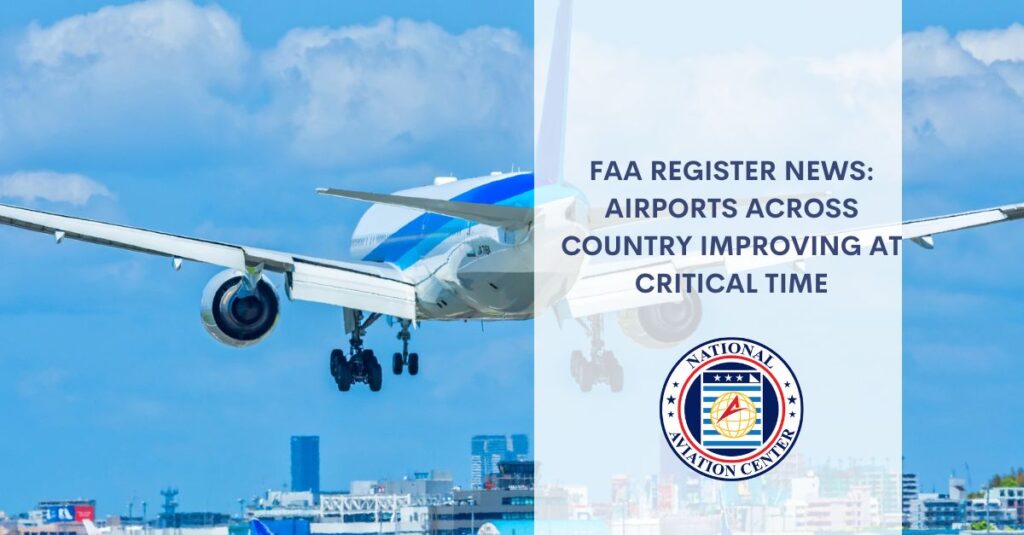
Major infrastructure projects at airports across the United States are arriving at a moment when capacity, safety, and traveler expectations are more critical than ever. Behind these improvements lies a framework of regulatory oversight that connects every aircraft owner to the national system. The FAA register plays a part in ensuring that the expanding network of American airports continues to support safe operations for pilots and passengers.
Recent developments, including a major funding infusion at Austin–Bergstrom International Airport and new expansion plans approved for Seattle–Tacoma International Airport, highlight just how intertwined airport growth and federal aviation compliance have become.

Recent Airport Extensions
My San Antonio reports that Austin–Bergstrom is moving forward with a major expansion supported by more than $100 million in new FAA funding.
Beyond that, Travel and Tour World confirms that the Port of Seattle has secured FAA approval for sweeping airport improvements expected to elevate capacity and efficiency for years to come.
Together, these stories show how airports are preparing themselves for rising demand, evolving technology, and the continued push for safer, more reliable travel.
The Broader Meaning of Airport Expansion for Aviation Safety
Airport infrastructure is far more than concrete, steel, and gates. It shapes how aircraft move, how passengers transit, and how pilots interact with increasingly complex airfield environments.
The new funding for Austin–Bergstrom supports its ability to manage larger volumes, reduce congestion, and expand facilities that serve both commercial and general aviation.
Seattle’s latest approval points to a similar pattern:
• Larger terminal spaces for smoother passenger flow
• Improved taxiways to cut down on delays
• Upgraded technology to enhance situational awareness for pilots
• More support for ground operations and ramp safety
These expansions matter because they influence every stage of flight, from pre-takeoff taxi to final approach. With more air traffic expected nationwide, upgrades like these reduce the strain on pilots and ground teams while boosting predictability during high-volume periods.
Why Pilots Are Paying Close Attention
Changes at major airports affect pilots regardless of whether they fly frequently in or out of those locations. Improvements at high-traffic hubs often serve as templates for medium and smaller airports, influencing standards and procedures that ripple across the entire aviation ecosystem.
Pilots benefit from:
• Wider, more efficient taxi routes that reduce surface conflicts
• Better lighting and signage for improved orientation
• More predictable ramp operations
• Enhanced safety technology built into new airport layouts
• Reduced congestion that minimizes holding patterns
When infrastructure keeps pace with demand, pilots gain a safer environment in which to navigate. These benefits connect directly to regulatory expectations linked with documents such as an airworthiness certificate and registration records, which confirm that each aircraft entering the airspace system meets federal standards.
How Passengers Benefit From These Improvements
Passenger experience has become a metric of national competitiveness. Airports are no longer seen simply as transit points. They represent efficiency, reliability, and the strength of the transportation network.
Airport expansion supports passengers through:
• Shorter wait times during peak hours
• More amenities that ease long travel days
• Faster baggage operations
• Increased gate availability
• Better access to connecting flights
Passengers may not know the technical details of runway extensions or terminal construction, but they feel the effects in reduced delays and smoother experiences. In many ways, these improvements show a system getting ready for long-term growth and increased throughput.
The Connection Between Airport Growth and FAA Register Documentation
As the national aviation system becomes more complex, accordingly, proper documentation grows in significance. At the same time, the move toward expanded airport capacity requires accurate tracking of aircraft ownership, maintenance status, and operational eligibility. In this process, the FAA register is one of the tools used to keep that system organized.
Everything from airport planning to runway usage projections depends on accurate records. Knowing how many aircraft are operating, where they are based, and whether they meet regulatory requirements helps maintain alignment between infrastructure and activity.
Accurate filings ensure that:
• Aircraft are properly entered into federal records
• Ownership details are updated when needed
• Documentation matches current airworthiness status
• Operations align with requirements outlined in Part 47 of the federal regulations
Keeping filings current heightens safety and reduces administrative issues that could delay operations.
Our Role in Supporting FAA Register Documentation
There is a direct connection between smoother airport operations and accurate documentation. As a result, as infrastructure expands, the aviation system becomes more interconnected. In turn, that environment makes precise filings essential.
For this reason, our service exists to support pilots and aircraft owners who want to keep their records accurate without spending unnecessary time navigating complex forms. Through a centralized online portal, you can prepare and submit required FAA paperwork in a structured, intuitive format.
We help streamline:
• Registration submissions
• Updates to existing documentation
• Ownership-related filings
• Compliance forms that support lawful operations
This structure helps aircraft owners remain aligned with federal requirements while the broader airspace system evolves.
Why Accurate FAA Records Matter More Than Ever
With airports expanding and air traffic increasing, federal oversight depends heavily on up-to-date information. The FAA uses registration data to track aircraft movement, understand fleet composition, and ensure that only eligible aircraft are operating in the national airspace.
Accurate filings reduce several common risks:
• Delays caused by incomplete registration
• Ownership disputes that interfere with operations
• Maintenance evaluations slowed by missing data
• Paperwork issues during inspections or reviews
Proper filings also simplify the process when an owner seeks support services or upgrades that depend on documented proof of ownership or eligibility.
Supporting Pilots During a Period of Rapid Growth
Periods of expansion often come with operational changes that pilots must adapt to. New procedures, revised taxi routes, or updated communications protocols require awareness and preparation.
During these changes, pilots benefit from:
• Clear guidance from air traffic control
• New signage and ground markings
• More intuitive airport layouts
• Added capacity that reduces last-minute rerouting
Even with these improvements, pilots still need to ensure their aircraft records remain current. The same forces driving expansion are increasing the emphasis on proper regulatory compliance.
How We Help Aircraft Owners Navigate the FAA Register
While airport construction takes place on the ground, documentation ensures the reliability of what moves through the sky. Each aircraft’s history, ownership details, and maintenance status influence broader safety outcomes.
This includes filings and updates such as the aircraft change of address, an application for an aircraft mortgage, reaching out for an aircraft abstract of title, or acquiring the necessary paperwork to facilitate a plane exchange of ownership, among other forms.
These filings are essential for maintaining an accurate chain of records. Proper documentation makes it easier to address maintenance questions, ownership transitions, financing requirements, and insurance reviews.
Bringing Airport Expansion and the FAA Register Together
Infrastructure improvements at airports like Austin–Bergstrom and Seattle–Tacoma signal a national trend toward modernization. In this context, they show how airports are preparing for a future with more traffic, more technology, and higher expectations from passengers and pilots.
As these changes unfold, aircraft owners need to ensure their federal records remain current. Whether it relates to compliance, ownership, maintenance, or official tracking, proper documentation supports the safe and efficient use of the growing network of airports.
We remain committed to helping aircraft owners manage the forms connected to the FAA register so they can stay focused on flying, adapting to new infrastructure, and benefiting from a safer, more capable aviation system.