

Every aircraft owner in the United States is tasked with the renewal of their aircraft registration. Aircraft Registration Renewal is an official process in which authorization is renewed for an aircraft to operate. An aircraft without a valid registration may be grounded, have no insured coverage, and may have compliance issues. Private owners, operators and aviation companies must keep abreast of renewal requirements so that they can continue to fly.
Aircraft registration mandates regular renewal unlike once-off registration. The procedure states owner information, aircraft information, and eligibility are still accurate. Most owners fail to appreciate the need to renew on time until there is delay or enforcement problem. A good overview of what lies ahead helps prevent distress.
This guide shows how to renew your aircraft registration. It explains what renewal is, why it matters and how it is different to other aviation compliance. Helpful tips are included to help owners complete the process smoothly and on schedule. When you finish, you will know exactly how to renew an aircraft registration like a confident and competent pilot.
Understanding Aircraft Registration Renewal
The validities of an aircraft registration term may be extended through an aircraft registration renewal after the initial term. Registration is not permanent and must be renewed at intervals to remain active. This system helps national aircraft records accurate
An aircraft’s renewal shows that the aircraft still belongs to the registered party and is still eligible. This also helps remove older or unused registrations from live databases. Regulators and aircraft owners benefit from this.
If you don’t renew your registration, it will expire. An aircraft loses its legal authority to operate due to expired certificate. Might hamper flight operations and business activities
Why Aircraft Registration Renewal Is Important
Aircraft Registration Renewal plays a vital role in aviation safety, compliance, and accountability. It supports accurate recordkeeping across the aviation system.
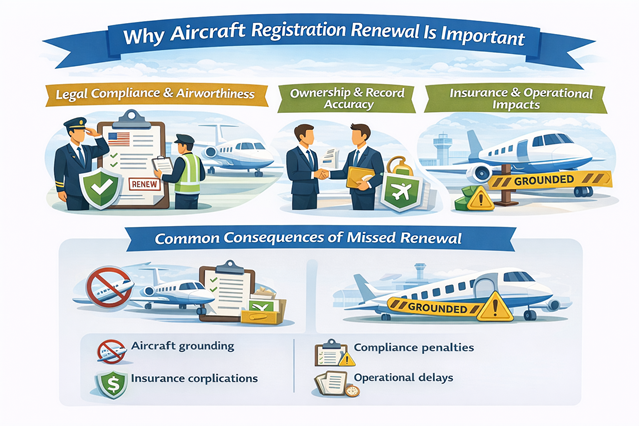
Legal Compliance and Airworthiness
It is illegal to fly an aircraft that is not registered. Renewal makes sure the aircraft is in line with the federal statutes. Complying avoids penalties and compliance actions for owners.
While they are distinct processes, the registration renewal and airworthiness certification are both necessary for legal operation. You cannot substitute one for the other. Avoid interruptions by staying current.
Ownership and Record Accuracy
Renewal verifies that the ownership information remains accurate. Changes in ownership, address, or entity status must be accurately reflected. It avoids ambiguities in official documents.
Accurate registrations can aid law enforcement, safety investigations and reporting. When records are accurate it benefits the whole aviating community.
Insurance and Operational Impacts
The valid registration of aircraft is demanded by many insurance policies. A registration that is past its due date could complicate claims or coverage. Renewal shields your financial interests.
Charter operations and business flights could be grounded immediately after a lapse in registration. Renewing on time avoids revenue loss and schedule issues.
Common Consequences of Missed Renewal
- Aircraft grounding
- Compliance penalties
- Insurance complications
- Operational delays
These consequences reveal why renewal must not be neglected. Effective management prevents unwanted risks.
Aircraft Registration Renewal Compared to Other Aviation Requirements
Airplane owners are accountable for various compliance. It will assist in planning understanding registration renewal compared to other needs.
| Requirement | Renewal Frequency | Operational Importance |
| Aircraft Registration | Periodic | Mandatory |
| Airworthiness Certificate | Ongoing | Mandatory |
| Pilot Certification | Periodic | Mandatory |
| Maintenance Inspections | Scheduled | Mandatory |
Compliance Risk Comparison
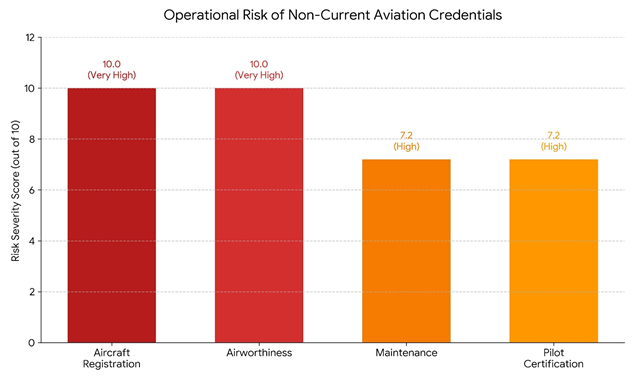
- The aircraft registration process and airworthiness have the most risk (10.0) for critical compliance based on the enforcement study. These operations under either condition is Very High risk, which usually results in a grounding immediately and severe legal penalties.
- The Registration and Airworthiness are of equivalent weight because mechanical safety is not just legal status of the aircraft. A well-functioning plane that is not airworthy is not of any value.
- Human and Machine Maintenance: Both Maintenance and Pilot Certification receive a score of 7.2, indicating a High risk. Any failure in these aspects puts all flights at risk and results in voided insurance.
Practical Tips for Managing Aircraft Registration Renewal
Raising awareness is the first step of Managing Aircraft Registration Renewal. Owners should be aware of expiration timeframes and be prepared. It is risky to wait until the end.
Keep detailed records. You should update the registry promptly whenever there is any change in address, ownership structure or aircraft condition. Precautious Customer Information Speed Renewal Processing
Set reminders long before expiry. A digital calendar or compliance checklist will prevent you from making a mistake. Constant systems cut down on stress.
Best Practices for Smooth Renewal
- Track expiration dates early
- Keep ownership information current
- Respond promptly to renewal notices
- Maintain organized aircraft records
Making it easier to renew. Uninterrupted operations organization assures.
Staying Current With Aircraft Registration Renewal
The renewal of an aircraft registration is a fundamental obligation of an owner. This helps your business operate legally, maintain accurate records and comply with regulations. When the process is well-known, risks of expiry and enforcement delay are mitigated.
This guide explained what Aircraft Registration Renewal is, why it is important, and how it compares to other aviation requirements for National Aviation Center. Owners were provided with tips to manage renewal efficiently. Gaining insight encourages action.
Owner’s aircraft, operations and investment protected by remaining aware of Aircraft Registration Renewal. Renew on time to avoid grounding and administrative issues. Keeping your registration current not only meets requirements but also demonstrates responsibility. It is significant.