



Aircraft Claim of Lien refers to a legal claim against an aircraft owner’s interest in an aircraft. A creditor may file an Aircraft Claim of Lien to record an interest in an aircraft for a debt or obligation. Owners, buyers, lenders, and maintenance providers must understand liens to avoid aircraft operational disputes and delays.
In aviation aircraft are usually expensive and financed, leased or serviced under an agreement. An aircraft may be subjected to a lien when its debts are not paid. When an aircraft is subject to a lien, it can’t be sold or remortgaged. When owners go to do a transaction, they discover them and that can be expensive.
This Guide Explains Aircraft Claim of Lien in an easy to way. A lien, its significance and the differences from other aircraft records. It covers all this and more. The owners and creditors receive practical guidance on how to handle lien filings. You may get a better understanding of how an Aircraft Claim of Lien would protect your financial interests while influencing the operation and ownership rights of an aircraft.
Understanding Aircraft Claim of Lien
A creditor’s interest in an aircraft is established with an aircraft claim of lien as a legal notice. An aircraft lien claim arises when there has been an unpaid debt related to the aircraft. Common examples include loans, maintenance fees, or servicing fees.
Once recorded, the encumbrance becomes part of the aircraft’s official record. This causes the debt to be known to potential buyers, lenders and interested parties. Transparency prevents unauthorized transfers or concealed liabilities.
An aircraft may still operate despite a lien. Nonetheless, this can limit ownership actions. Aircraft sales or transfers usually requires complaints to be settled.
Why Aircraft Claim of Lien Is Important
The Aircraft Claim of Lien ensures transparency in aviation transactions and protects financial interests of lenders and owners. It is important for several parties.
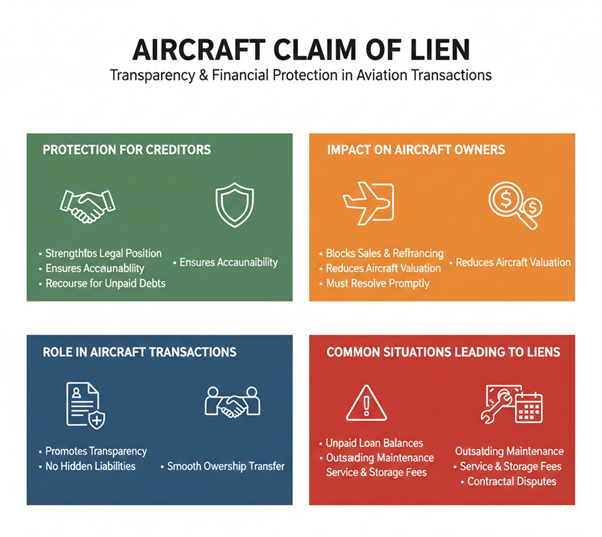
Protection for Creditors
Creditors may have limited recourse without a recorded lien. Filing a lien strengthens their legal position and promotes accountability.
Impact on Aircraft Owners
A lien indicates unresolved financial obligations for owners. It is possible that it blocks or delays sales, refinancing, or registrations. When owners are aware they can address the issues quickly.
Aircraft valuation may also be impacted by liens. A buyer, before making a purchase, usually requires some kind of clear record. Outstanding liens may influence the buyer.
Role in Aircraft Transactions
Lien records are regularly examined by aircraft buyers and lenders. Easy transactions with clear records. Liens create transparency. No hidden liabilities.
Clearing encumbrances prior to sale protects all parties. It guarantees that there will be no dispute over ownership transfers.
Common Situations Leading to Liens
- Unpaid loan balances
- Outstanding maintenance invoices
- Service or storage fees
- Contractual payment disputes
Liens may arise very easily in such situations. Effective financial management prevents financial crisis.
Aircraft Claim of Lien Compared to Other Aircraft Records
Different filings are present in aircraft records. To manage compliance correctly, it is helpful for owners to understand how a lien differs from other records.
| Record Type | Purpose | Effect on Ownership |
| Aircraft Claim of Lien | Secure unpaid debt | Restricts transfer |
| Aircraft Registration | Establish ownership | Required for operation |
| Bill of Sale | Transfer ownership | Changes owner |
| Airworthiness Certificate | Confirm safety status | Required for flight |
Transaction Impact Comparison
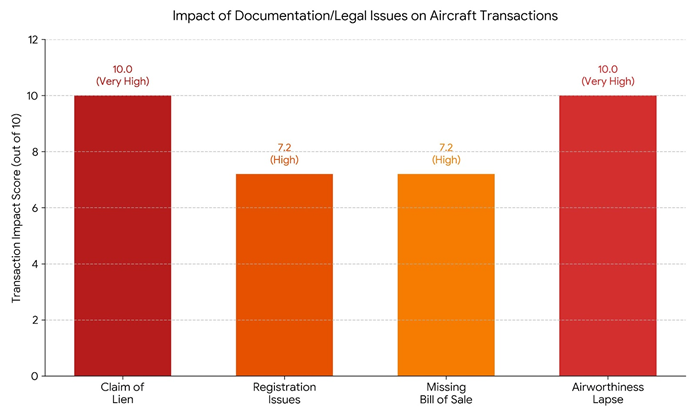
- A Claim of Lien and an Airworthiness Lapse carry the maximum impact score of 10.0 each. These problems are usually total deal-breakers, halting a sale until a legal or mechanical solution is found.
- The Missing bill of sale scores a rather significant High with a score of 7.2 for Title Chain Integrity. If there’s no clear paper trail showing who owns the land, it will be hard to get title insurance and financing.
- One major form of regulatory friction is registration issues (which also applies to 7.2). If registration with the FAA or the relevant authority is expired or incorrect the aircraft cannot fly.
Practical Tips for Managing Aircraft Claim of Lien
Managing an aircraft claim of lien starts with accurate recordkeeping. Owners must keep a tab on aviation-related liabilities. Knowledge disallows surprises.
Before buying an aircraft, scrutinize lien records. Detecting liens early permits parties to negotiate or resolve the issues prior to closing. This shields buyers from debts that burden an estate.
For creditors, prompt and proper filing is essential. When properly documented the lien will be enforceable and visible. Records that are clear lessen disputes.
Best Practices for Owners and Creditors
- Monitor aircraft financial obligations
- Review records before buying or selling
- Resolve liens promptly after payment
- Maintain documentation of lien releases
Adhering to these actions preserves ownership rights as well as financial ones. Company facilitates adherence.
Managing Risk Through Aircraft Claim of Lien Awareness
The lien, which can be enforced in court, can affect ownership and financing. Further, it can influence the aircraft’s eventual transferability. It ensures transparency and secures unpaid liabilities. By understanding the function of a limited company, owners and creditors will act more responsibly for National Aviation Center.
This guide explains what an Aircraft Claim of Lien is, why it is important, and how it differs from other aircraft records. Here are a few suggestions to facilitate proper management. Knowledge minimizes risk.
Keeping up-to-date on lien status and solving any problems contributes to security of aircraft investment and operational flexibility. An Aircraft Claim of Lien is more than just a form legal document. It’s a crucial element of responsible plane ownership and financial responsibility.