

The de-Registration of an Aircraft typically takes place when an Aircraft is sold overseas, permanently withdrawn from service or transferred to another Registry. It removes an aircraft from the FAA Civil Aircraft Registry and terminates its legal status as a U.S.-registered aircraft. This process ensures that the aircraft is no longer associated with U.S. registration requirements, thereby protecting the owners, buyers and authorities.
You may notice that many aircraft owners get de-registered during export, lease termination, or change in financing. Not de-registering them in time can lead to registry complications, compliance issues, and delays in re-registering abroad. Because aviation records are so precise, timing is everything.
Aircraft de-registration does not happen automatically. It needs a formal application, proper documentation, and adherence to FAA regulations. Mistakes or missing information can stall deals and cause lawsuits.
This guide explains aircraft de-registration in clear detail. The article will detail the what, why, and how of the ETL process. Whether you are an owner, lessor or aviation professional, understanding this process ensures a smooth and compliant aircraft transition.
An overview of De-Registering Aircraft
Aircraft de-registration refers to the procedure of removing an aircraft from the FAA registry. When the aircraft is finished it no longer displays U.S. nationality marks or registration privileges.
This is the process is used most to export an aircraft. A new registration is only given after de-registration proof is provided by many countries. Without this, international transfers can halt.
When an airplane is scrapped, destroyed or withdrawn from use, it is also de-registered. The FAA registry will have updated, accurate records because of this.
| Aspect | Description | Why It Matters |
| Registry Removal | Aircraft removed from FAA records | Prevents duplicate registrations |
| Legal Closure | Ends U.S. registration obligations | Supports compliance |
| Export Readiness | Enables foreign registration | Avoids delays |
| Record Accuracy | Updates national registry | Maintains transparency |
By doing proper de-registration of the aircraft all parties involved are protected while transferring the ownership of the aircraft.
When and why is the de-registration of aircraft?
Knowing when de-registration of aircraft is required avoids regulatory issues and transaction delays.
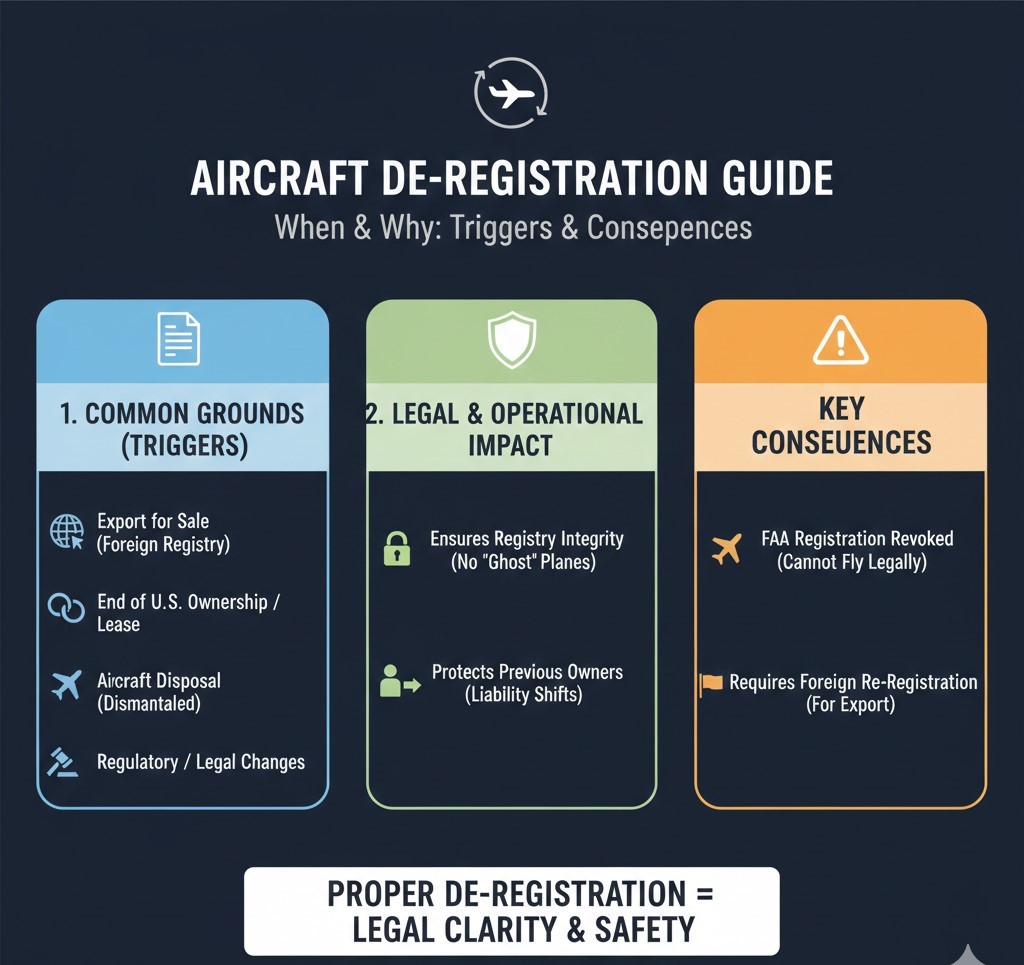
Common Grounds for De-registration
Depending on the situation, aircraft registration may be required. Each scenario shall require different documentation.
Most frequent reasons for exporting is for sale. The authorities of the foreign country require evidence that the aircraft is no longer registered in the U.S.
De-registration is also triggered by leasing structures. When a U.S.-based lessor or registered jurisdiction loses an aircraft, removal may be necessary.
Leaving the service permanently is another reason. Once an aircraft is dismantled and destroyed, it must be delisted from the registry.
Legal and Execution Issues
Removal guarantees registry integrity. It stops an airplane from appearing operational when it is not operating by the authority of the U.S.
The previous owners are also protected from liability. When you are de-registered, the liability shifts as per the new registry rules.
Triggers and outcomes are summarized in 2 lists
- Normal Causes for Aircraft De-Registration.
- Export to a foreign registry.
- U.S. ownership or lease is fully ended.
- Disposal of the aircraft.
- Alteration of regulation or law.
- De-registration Consequences and Effects.
- FAA registration revoked.
De-Registration of Aircraft in Contrast to Other FDA Actions
Aircraft de-registration is often confused with other FAA administrative actions. Every process has a specific goal.
FAA Aircraft Status Actions
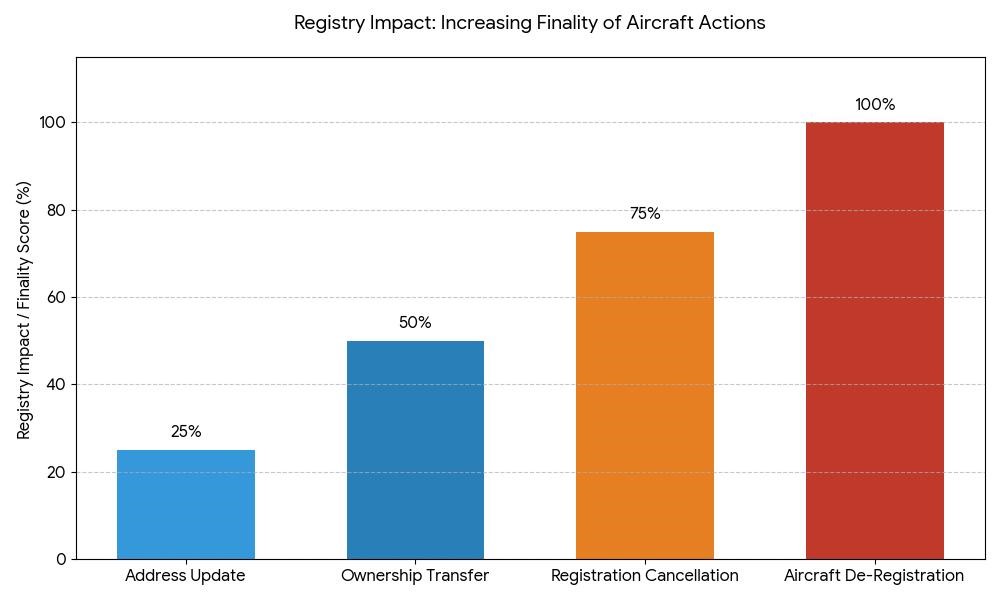
• A Routine Administrative Updates: An Address Update (25%) means registry and owner will continue to communicate without any issues, and therefore has least impact – the aircraft’s legal status will remain unchanged. It is routine maintenance.
• Transferring Ownership (50%) allows for the legal change of owners while maintaining the continuance of registration. Thus the aircraft remains on the registry and has a clean operational history.
• A Registration Cancellation (75%) is usually for administrative/temporary purposes. While it prohibits the aircraft from flying legally in the short-term, it is not an indication of the permanent termination of the aircraft’s life on the national register.
Steps to follow for aircraft de-registration
The aircraft de-registration process requires a solid amount of preparation.
necessary documents
The FAA needs forms and supporting documents. They verify ownership control and desire to de-register.
Records should be accurate and consistent with the registry Discrepancies may take longer to resolve.
Sequential Procedure
- There is a specific procedure involved.
- Validation of aircraft eligibility to de-register.
- Make written de-registration request.
- Send necessary papers to the FAA.
- Waiting for confirmation and registry update.
Easy process practical tips for you
The timing matters. Align de-registration with termination dates and overseas registration timelines.
Confirm that all liens or interest issues are dealt with. Approval might be delayed due to outstandingClaim of Lien.
Here are two narrowed-down lists to help you prepare.
Commonly Required Documents
- Documented request for removal.
- Evidence of ownership power.
- Back up sale or export records.
- Airplane specifics of identification.
Essential Steps to Prevent Delays
- Check registry data before you.
- Clear liens prior to submission.
- Maintain consistent aircraft ID.
- Develop buffers for processing time.
Confidently Handling Aircraft De-Registration
To finalize an aircraft’s removal from the U.S. registry, aircraft de-registration is vital compliance. It facilitates clear documentation for regulation and import/export transactions
If aircraft owners and operators understand the process, required paperwork and common mistakes, they can avoid delays. Planning for de-registration is done for the sales, exports, or operational change.
Aircraft de-registration may be procedural, but they have real-world legal consequences. National Aviation Center protects the people involved when it is considered a central part of the aircraft lifecycle management.
When the necessary preparation is made, and FAA specifications are observed, aircraft de-registration can be performed efficiently, accurately and with full-confidence of the regulators.